
Custom business systems built when off-the-shelf software doesn't fit
When the problem doesn't fit a plugin, a SaaS subscription or an existing template — we build what does. A regulatory-compliant learner management system. A multi-property holiday booking platform. A food ordering app with delivery slot management. Real bespoke software, delivered in weeks rather than months.




UK Based
Support
Fixed
Price Quotes
Weeks
Not Months
100%
Owned By You
When custom is the right answer
Six signs you need a bespoke build
Most businesses can find an off-the-shelf product that works for them. Sometimes they can't. These are the signs that a custom build is genuinely worth considering — not because we want to sell you one, but because we will tell you honestly when an existing product would serve you better.
You Can't Find One That Fits
You've trialled three or four SaaS products. Each one solved part of the problem but not all of it. Each one would require workarounds. The combined cost of the workarounds is worse than building once and owning it.
You've trialled three or four SaaS products. Each one solved part of the problem but not all of it. Each one would require workarounds. The combined cost of the workarounds is worse than building once and owning it.
The Monthly Cost Is Adding Up
You're paying £300+ a month across multiple SaaS subscriptions to do something a custom system could do in one place. Over five years that's £18,000+ in subscription fees, with everything still locked in someone else's platform.
You're paying £300+ a month across multiple SaaS subscriptions to do something a custom system could do in one place. Over five years that's £18,000+ in subscription fees, with everything still locked in someone else's platform.
Compliance Or Audit Matters
Off-the-shelf SaaS gives you what they decide to give you. Sometimes that's not enough for ISO, GDPR, ESFA, Ofsted, FCA or similar audit requirements. We design audit-grade systems where compliance is built in from day one.
Off-the-shelf SaaS gives you what they decide to give you. Sometimes that's not enough for ISO, GDPR, ESFA, Ofsted, FCA or similar audit requirements. We design audit-grade systems where compliance is built in from day one.
You're Stuck With A Vendor
The product is being deprecated. Pricing has tripled. New features go to enterprise tiers only. The export is incomplete. Sound familiar? Custom builds give you the exit they never wanted you to have.
The product is being deprecated. Pricing has tripled. New features go to enterprise tiers only. The export is incomplete. Sound familiar? Custom builds give you the exit they never wanted you to have.
Your Process Is Genuinely Unique
Every business has bits where the workflow is different from the standard. A custom build leans into your uniqueness instead of forcing it through someone else's template.
Every business has bits where the workflow is different from the standard. A custom build leans into your uniqueness instead of forcing it through someone else's template.
You Want To Build Something New
An idea no off-the-shelf product solves yet. A new product line, a new service, a competitive edge that depends on the software being different. Custom is the only way to do that.
An idea no off-the-shelf product solves yet. A new product line, a new service, a competitive edge that depends on the software being different. Custom is the only way to do that.
What custom builds look like in practice
Real systems, real numbers, real production deployments
Learner Management System
South Cumbria Skills Exchange. 23-day build. £260 hard cost vs £97k+ traditional. Four React dashboards, 31 REST controllers, ESFA-compliant.
South Cumbria Skills Exchange. 23-day build. £260 hard cost vs £97k+ traditional. Four React dashboards, 31 REST controllers, ESFA-compliant.
TP Food
Dottites. Two-app React food ordering platform with delivery slot management, WooCommerce payments and 26 database migrations. Production-grade.
Dottites. Two-app React food ordering platform with delivery slot management, WooCommerce payments and 26 database migrations. Production-grade.
Motorhome Booking
Wicham Parish Council + Estuary View Escapes. Bay-level availability, DVLA reg lookup, season pricing, warden frontend. 12,000+ lines of properly-engineered code.
Wicham Parish Council + Estuary View Escapes. Bay-level availability, DVLA reg lookup, season pricing, warden frontend. 12,000+ lines of properly-engineered code.
TP Event Management
Lakeland Life Events. Multi-day events, supplier portal, ticketing, complex pricing rules. React frontend, PHP REST API, custom WordPress plugin.
Lakeland Life Events. Multi-day events, supplier portal, ticketing, complex pricing rules. React frontend, PHP REST API, custom WordPress plugin.
Flagship case study
A £97k system built in 23 days for £260 in hard costs
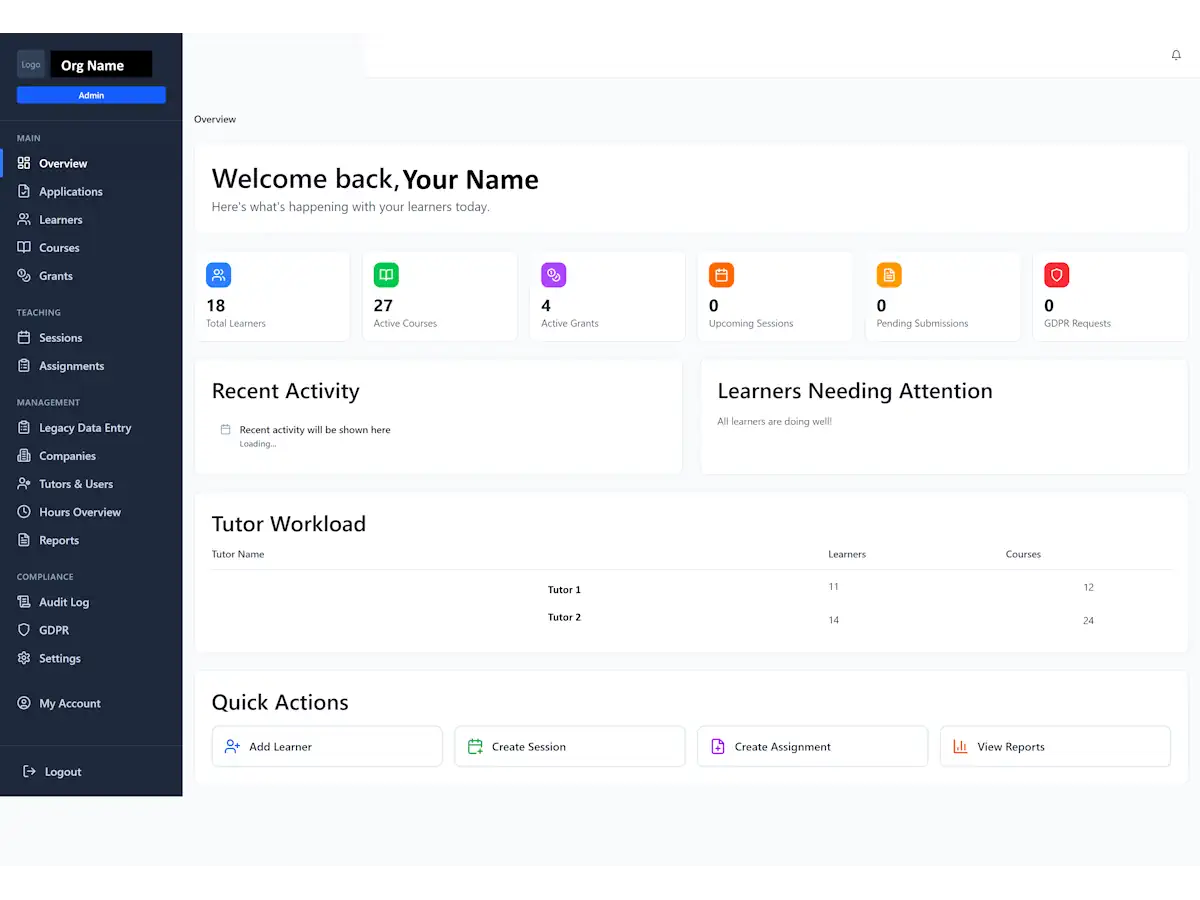
The Learner Management System for South Cumbria Skills Exchange is the most visible demonstration of how we build custom systems.
The client needed a regulatory-compliant LMS to replace spreadsheets and paper. Commercial alternatives — MAYTAS, Tribal, ProSolution — quoted £97,500 to £137,500 to set up and customise. The CIC couldn't justify that against its annual budget.
We built them what they needed instead. Four role-based dashboards in React: Admin, Tutor, Learner and Guardian. Nineteen custom database tables. Thirty-one REST API controllers. Full ILR compliance for DfE reporting. Grant-funded hour tracking. PDF invoice generation. Audit logs on every data write. Built in 23 calendar days for £260 in hard costs. In daily use today and has cut administrative time by more than half.
Everything is documented. Every milestone has a journal entry with a commit hash. The methodology is published in the book Building Without Code. The numbers are verifiable from the project journal.
Our methodology
Why we can build in weeks what teams take months to build
AI-accelerated development with traditional engineering discipline.
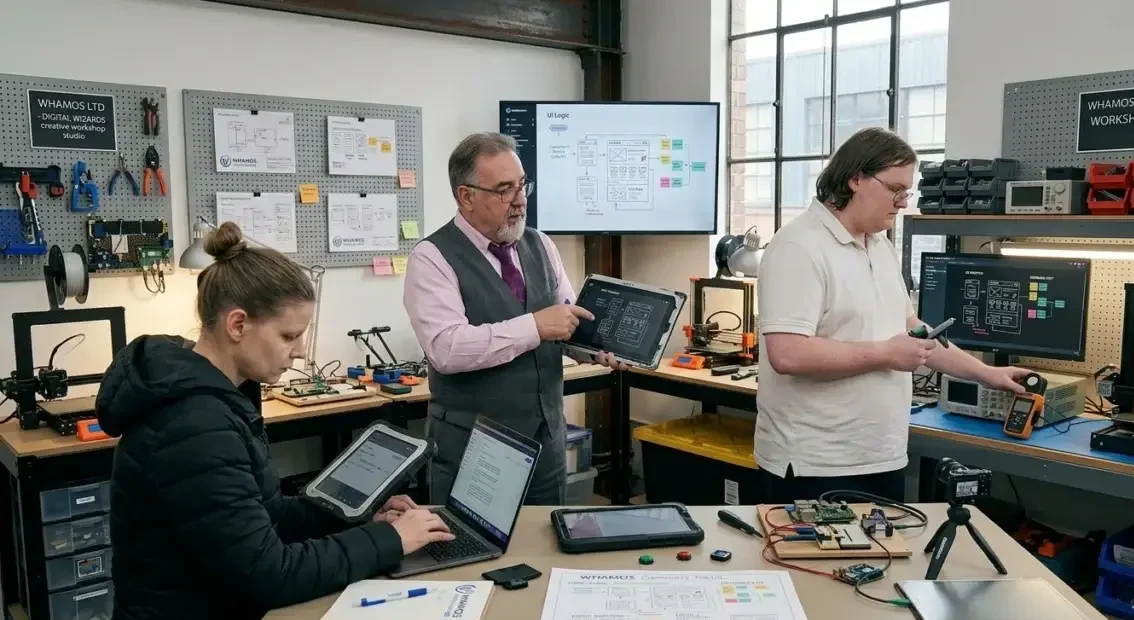
Every project starts with a Project File — a 1,000 to 3,000 line living specification that the AI reads at the start of every coding session. It includes the architecture, the data model, the business rules, the deployment process and the boundary cases. The AI never has to guess what to build because the Project File is its external memory.
We use sandwich prompts: Team Brief plus Task plus Restraints. The Team Brief gives the AI its role. The Task is the specific work for this session. The Restraints define what not to touch, what to avoid, and what to ask before assuming. This is how a junior team is run in practice — and AI agents respond to the same structure.
Every milestone gets a journal entry. Every code change is documented. Every API has authentication, capability and scope checks built in at the model layer. The discipline scales because it's encoded, not just discussed.

How long custom builds take
Weeks, not months — but not magic
Most custom systems we build deliver in 4-12 weeks for moderately complex platforms. Simpler builds — a focused single-purpose application — can be 2-4 weeks. The LMS was unusual at 23 days; it was sized for a much longer build, and the AI methodology compressed it.
What we will not tell you is that we can build any custom system in three weeks. Some systems genuinely need longer. We will quote a fixed price and a delivery range after the discovery call, both honestly scoped. If we think your project is 12 weeks we will tell you 12 weeks; we will not promise four and then slip.
What is consistent across every build: weekly progress on a staging URL, weekly demos, every milestone documented, full code ownership transferred on delivery. You never end up wondering what we've been doing for the last fortnight.
Honest pricing
Fixed price quotes after a discovery call
Most custom system builds fall between £8,000 and £30,000 depending on scope. A focused single-purpose application — say, a quoting tool or a customer portal — is typically £8,000-£15,000. A multi-role platform with several dashboards, custom database tables, integrations and a public-facing site is typically £15,000-£30,000. The Learner Management System would have cost £97k+ from a traditional development house; we built it at human-time-value of around £8,000.
The fixed price is set after a discovery call where we map the work in detail. From that point, you know what you are committing to. We invoice in milestones: a deposit on scope agreement, payment at agreed midpoints, balance on delivery. No hourly billing for vague work. No surprise additions. Scope changes during the build are quoted separately and approved before they happen.
For grant-funded or community organisations, we are willing to discuss flexible payment structures. Talk to us.
Full ownership, no lock-in
You own the code, the data, and the deployment
Every custom system we build is yours when it's done.
The complete source code is delivered to you in a Git repository — typically GitHub, but we can use GitLab, Bitbucket or self-hosted Gitea if you prefer. The code is documented to the level a competent developer could pick it up and extend it without us. The deployment instructions are written so anyone with reasonable WordPress experience can run it. The database schema is fully described in versioned migration files.
You can run the system on your own hosting from day one. We do not host it for you (though we can recommend hosts and help you set up if needed). You can engage another developer to maintain or extend the system. You can sell or transfer the code if you ever wanted to. None of that needs our permission because the code is yours.
We stay involved as much or as little as you want — ongoing support packages, change requests, or a clean handover and we walk away. Whichever suits you.
What we won't build
Being honest about where custom isn't the answer
We won't build a custom system if an off-the-shelf product would genuinely serve you better. We will tell you that on the discovery call and recommend the product we'd pick.
If your need is a generic CRM with no unusual workflows — use Pipedrive or HubSpot. If your need is a generic e-commerce shop — use WooCommerce or Shopify. If your need is generic accounting — use Xero or QuickBooks. If your need is generic project management — use Asana, ClickUp or Notion. These are mature, well-supported products built by teams of hundreds. We can't beat them on cost or features for generic use cases, and we won't pretend otherwise.
Where we can win: when your need is genuinely different from the generic, when the SaaS subscriptions are adding up beyond the cost of a build, when compliance requires more than the off-the-shelf offers, or when you need to own the result. In those cases custom is the right answer — and we will be honest about that too.
23
Days for our fastest custom platform build
4-12
Weeks typical custom build window
£8k+
Starting price for focused builds
100%
Code ownership transferred on delivery
Industries we have built custom for
Real production systems across six different sectors
What clients say about custom builds
Real users of systems we built from scratch
How a custom build runs
Three steps from discovery to delivery
Discover
60-90 minute structured workshop where we map your business, the system needed, the data model, the integrations, the compliance requirements. We come back with a written scope, an architecture document, and a fixed-price quote.
60-90 minute structured workshop where we map your business, the system needed, the data model, the integrations, the compliance requirements. We come back with a written scope, an architecture document, and a fixed-price quote.
Build
4-12 weeks. Staging URL from week one. Weekly demos. Every milestone documented with commit hashes. Every database change is a versioned migration. Every API endpoint has authentication, capability and scope checks.
4-12 weeks. Staging URL from week one. Weekly demos. Every milestone documented with commit hashes. Every database change is a versioned migration. Every API endpoint has authentication, capability and scope checks.
Launch & Handover
Deploy to your hosting. Full code repository handed over. Documentation, deployment instructions, runbooks. 30-day bug-fix window included. Optional ongoing support thereafter — or a clean handover and we walk away.
Deploy to your hosting. Full code repository handed over. Documentation, deployment instructions, runbooks. 30-day bug-fix window included. Optional ongoing support thereafter — or a clean handover and we walk away.
Common questions about custom builds
Things prospects ask before signing a build agreement
What if my requirements change during the build?
Scope changes are normal during a 4-12 week build. We quote each change separately, agree it with you in writing, and only proceed once you've approved. The original fixed price stays fixed for the original scope; additions are added at agreed rates. No surprise invoices.
Yes. We can extend an existing custom plugin or web app — sometimes built by another developer — provided the codebase is fundamentally sound. We assess at the discovery stage. If the existing code is so badly written that rebuilding from scratch would be cheaper, we'll tell you that honestly.
Most custom systems are built as WordPress plugins because that gives clients an editing interface, audit logs and ownership without us reinventing the wheel. But if WordPress isn't the right fit — say, the system has no public-facing component — we can build standalone React applications with Node, PHP or Python backends. We pick the right stack for your situation.
Yes. We design for audit and compliance from day one. GDPR, ESFA, Ofsted and FCA-aware development. Every API endpoint has three security checks. Every data write creates an audit log entry. ILR fields, DSAR responses, controlled-data flows — all standard considerations in our builds.
Yes. We can build the system to integrate with your existing tools — CRM, accounts, calendar, shop, SMS, whatever your stack is. Most of our builds touch 3-8 third-party systems via APIs or webhooks. If a tool has an integration option, we can wire to it.
Fixed-price quotes after the discovery workshop. Most custom systems cost £8,000-£30,000 depending on scope. We invoice in milestones — deposit on agreement, payments at midpoints, balance on delivery. We will tell you the actual price after we understand the work, not before.
Got a problem no off-the-shelf product solves?
Tell us about it. We will tell you honestly whether a custom build is the right answer, how long it would take, and what it would cost.
Tell us about it. We will tell you honestly whether a custom build is the right answer, how long it would take, and what it would cost.