
An AI chatbot and SMS workflow for a Cumbrian precast concrete manufacturer
Block Moulds UK Ltd makes precast concrete block moulds for the UK construction industry. They needed to handle technical enquiries 24/7 from contractors checking availability and pricing. We built them a chatbot that knows the catalogue, qualifies quote requests, and routes complex enquiries to the sales team via SMS.




UK Based
Support
Twilio
SMS Routing
Live
Knowledge Base
WooCommerce
Integration
Project · Block Moulds UK Ltd
What the chatbot actually does
Block Moulds UK Ltd (formerly trading as MWR Fab Ltd) manufactures precast concrete block moulds from their facility in Cumbria. Their customers are construction contractors, civils contractors and architects who need specific mould types for specific projects — often at short notice.
Answers Product Questions Instantly
Trained on the full product catalogue. Standard sizes, custom options, available finishes, typical lead times, pricing bands. Answers in plain English without making things up about availability.
Trained on the full product catalogue. Standard sizes, custom options, available finishes, typical lead times, pricing bands. Answers in plain English without making things up about availability.
Qualifies Quote Requests
For more complex enquiries — bespoke moulds, large orders, custom finishes — the chatbot captures the requirement, contact details and project context, then routes the qualified lead to the sales team.
For more complex enquiries — bespoke moulds, large orders, custom finishes — the chatbot captures the requirement, contact details and project context, then routes the qualified lead to the sales team.
SMS to Sales Team via Twilio
When a qualified lead lands, the sales team gets an instant SMS via Twilio with the contractor's number, project type and key details. They follow up by phone, often within an hour, even out of hours.
When a qualified lead lands, the sales team gets an instant SMS via Twilio with the contractor's number, project type and key details. They follow up by phone, often within an hour, even out of hours.
Stays In Its Lane
The chatbot will not promise lead times it doesn't know, prices it hasn't been given, or stock levels it can't verify. Beyond a certain complexity, it captures the question and tells the contractor a real person will follow up.
The chatbot will not promise lead times it doesn't know, prices it hasn't been given, or stock levels it can't verify. Beyond a certain complexity, it captures the question and tells the contractor a real person will follow up.
Conversation Logs in WordPress
Every conversation logged in the WordPress backend with transcript, captured details and action taken. Sales team reviews to spot common questions and identify recurring missed opportunities.
Every conversation logged in the WordPress backend with transcript, captured details and action taken. Sales team reviews to spot common questions and identify recurring missed opportunities.
Integrated with the WooCommerce Catalogue
The chatbot reads from the live WooCommerce product catalogue, so when new moulds are added or stock status changes, the chatbot picks up the change at the next conversation. No separate knowledge base to maintain.
The chatbot reads from the live WooCommerce product catalogue, so when new moulds are added or stock status changes, the chatbot picks up the change at the next conversation. No separate knowledge base to maintain.
Why this project mattered
Construction contractors don't keep office hours
The Problem
Construction contractors plan ahead — and check pricing and availability at all hours. Block Moulds was getting enquiries late evening and weekends that went to voicemail until Monday morning.
Construction contractors plan ahead — and check pricing and availability at all hours. Block Moulds was getting enquiries late evening and weekends that went to voicemail until Monday morning.
The Constraint
A human receptionist on 24/7 cover was not justified by the call volume. But each missed enquiry that went to a competitor was thousands of pounds in lost business.
A human receptionist on 24/7 cover was not justified by the call volume. But each missed enquiry that went to a competitor was thousands of pounds in lost business.
The Decision
Build an AI chatbot trained on the product catalogue with SMS escalation. Capture the leads automatically out of hours; sales team picks them up within an hour during day hours.
Build an AI chatbot trained on the product catalogue with SMS escalation. Capture the leads automatically out of hours; sales team picks them up within an hour during day hours.
The Outcome
Production chatbot live on the site today. Enquiries captured around the clock. Sales team responds faster than before because qualifying questions are already answered.
Production chatbot live on the site today. Enquiries captured around the clock. Sales team responds faster than before because qualifying questions are already answered.
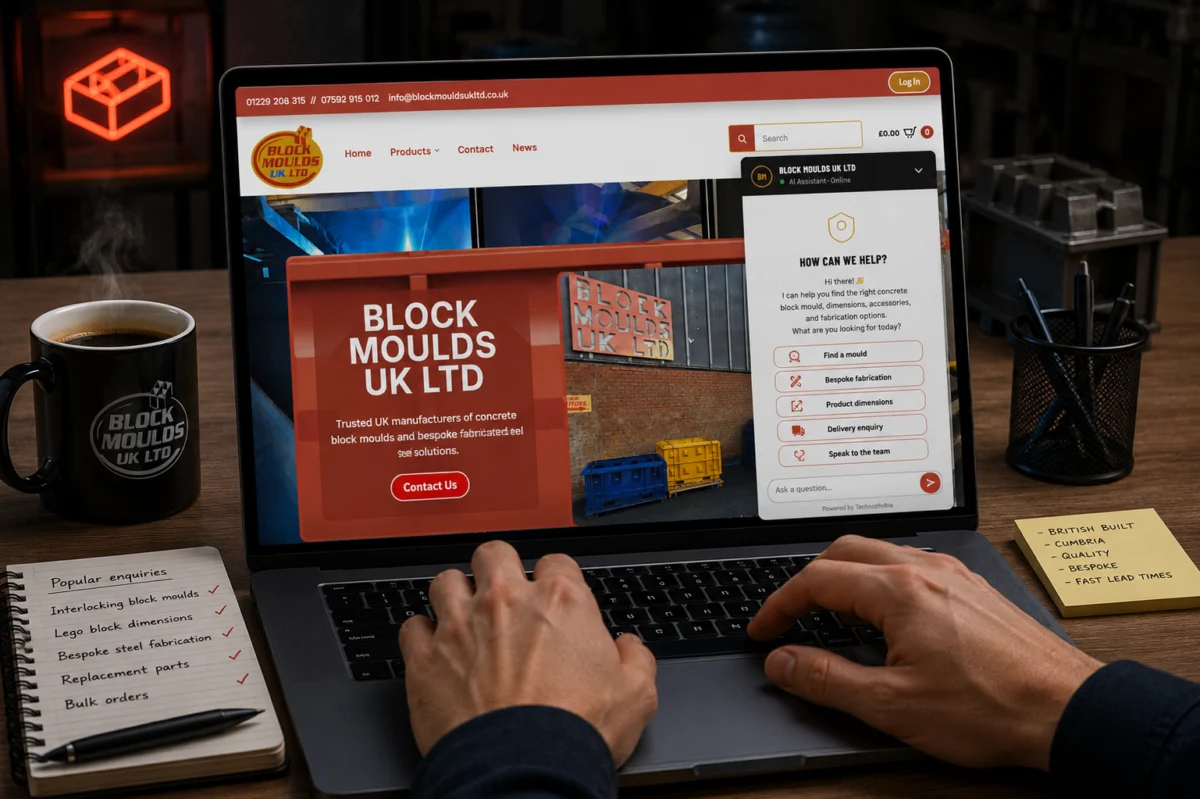
The architecture
LLM plus retrieval over your product catalogue
Block Moulds' chatbot is built on a retrieval-augmented generation (RAG) architecture. The LLM (in this case OpenAI's GPT-4) is given access to a structured knowledge base derived directly from the WooCommerce product catalogue and a curated FAQ document.
When a contractor asks 'do you make a 150mm slot block in retaining wall finish', the LLM doesn't try to remember from training data — it queries the knowledge base, retrieves the relevant product entries, and answers based on what it found. If the knowledge base has the answer, the chatbot gives a direct, accurate response. If it doesn't, the chatbot says so and captures the question.
The chatbot frontend is a small custom WordPress plugin embedded on the Block Moulds site. The plugin handles conversation state, conversation logging in custom WordPress database tables, integration with Twilio for SMS, and the connection to the OpenAI API. All on Block Moulds' own hosting and infrastructure — no third-party chatbot SaaS dashboard.
When a contractor asks 'do you make a 150mm slot block in retaining wall finish', the LLM doesn't try to remember from training data — it queries the knowledge base, retrieves the relevant product entries, and answers based on what it found. If the knowledge base has the answer, the chatbot gives a direct, accurate response. If it doesn't, the chatbot says so and captures the question.
The chatbot frontend is a small custom WordPress plugin embedded on the Block Moulds site. The plugin handles conversation state, conversation logging in custom WordPress database tables, integration with Twilio for SMS, and the connection to the OpenAI API. All on Block Moulds' own hosting and infrastructure — no third-party chatbot SaaS dashboard.
How the SMS routing works
Qualified leads land in the sales team's pockets within seconds
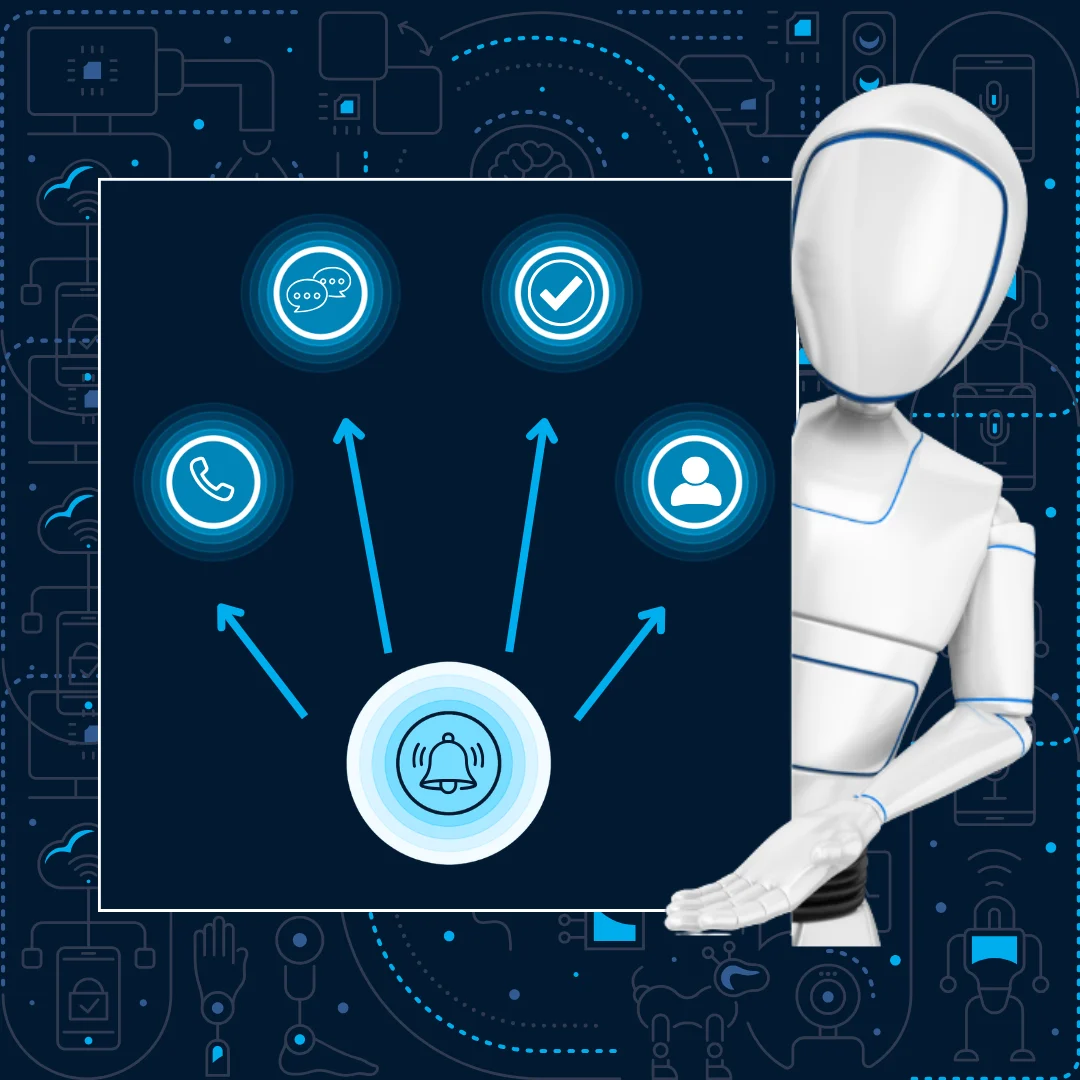
The SMS routing is one of the features that makes the Block Moulds chatbot more than a glorified FAQ widget.
When the chatbot identifies a qualified quote enquiry — bespoke mould request, large volume, custom specification, time-sensitive project — it captures the contractor's name, phone number, project context and key requirements. It then composes a structured SMS via Twilio and sends it to a designated sales team mobile number.
The SMS is concise and actionable: 'New quote enquiry: John Smith, 07xxx xxx xxx. 50no. 150mm slot blocks, retaining wall, delivery to Cockermouth by 14 March. Full transcript: link.' The salesperson can ring the contractor immediately or open the full transcript via a link.
Out of hours, the SMS still lands. Whether the sales team responds at 11pm or 8am the next morning is their judgement call — but the lead is captured, the customer knows someone will follow up, and the opportunity isn't lost.
When the chatbot identifies a qualified quote enquiry — bespoke mould request, large volume, custom specification, time-sensitive project — it captures the contractor's name, phone number, project context and key requirements. It then composes a structured SMS via Twilio and sends it to a designated sales team mobile number.
The SMS is concise and actionable: 'New quote enquiry: John Smith, 07xxx xxx xxx. 50no. 150mm slot blocks, retaining wall, delivery to Cockermouth by 14 March. Full transcript: link.' The salesperson can ring the contractor immediately or open the full transcript via a link.
Out of hours, the SMS still lands. Whether the sales team responds at 11pm or 8am the next morning is their judgement call — but the lead is captured, the customer knows someone will follow up, and the opportunity isn't lost.
The knowledge base that powers it
Synced from WooCommerce, augmented with curated FAQs
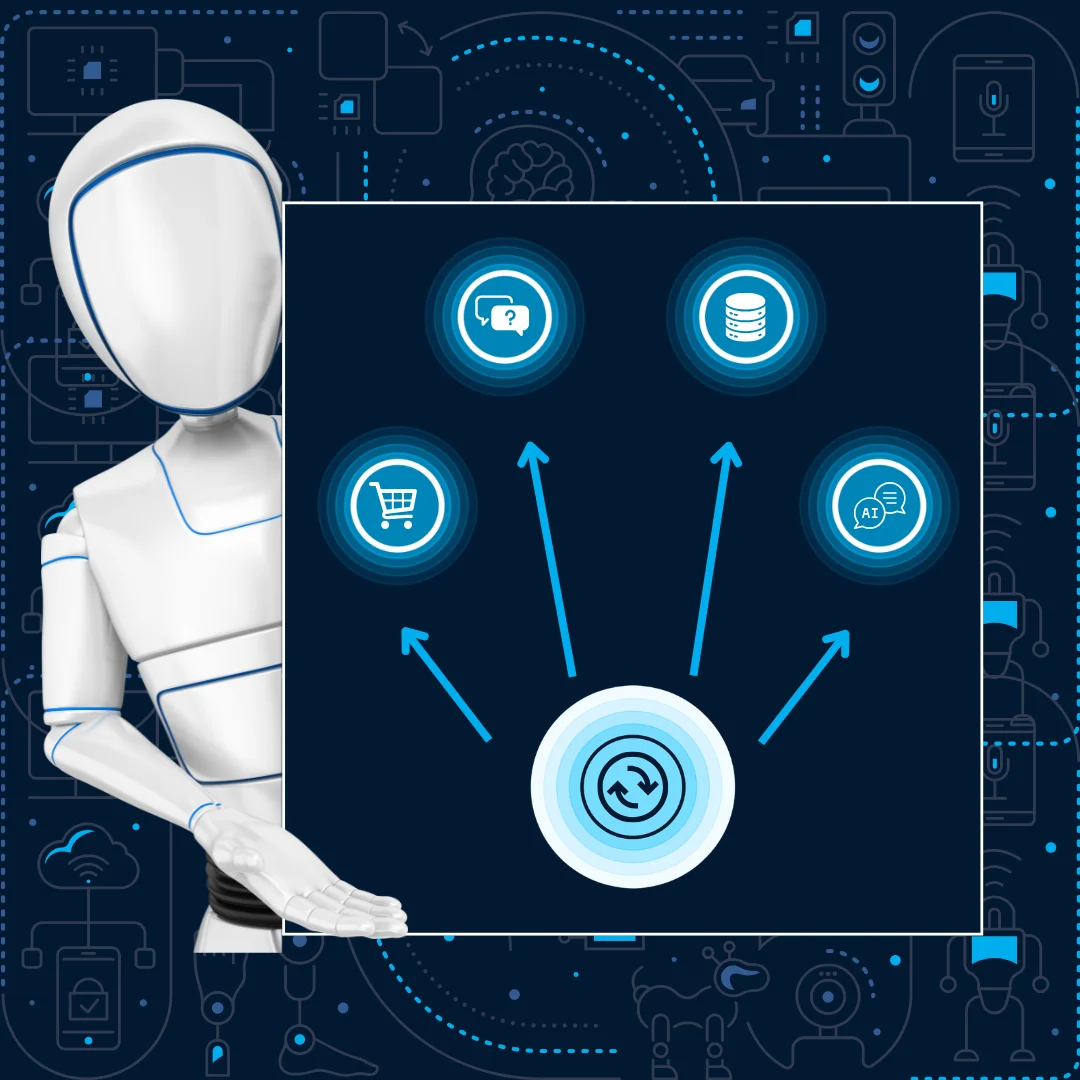
The chatbot's accuracy is only as good as its knowledge base. For Block Moulds, the knowledge base is built from two sources.
Primary source: WooCommerce product catalogue. Product names, dimensions, finishes, lead times, stock availability and pricing bands are pulled directly from the live catalogue at every conversation. When the product team adds a new mould or updates stock, the chatbot picks it up immediately — no separate sync process to remember.
Secondary source: curated FAQ document. Maintained by the sales team in a Google Doc. Covers questions that aren't strictly product-related: typical delivery times, payment terms, custom mould lead times, the design service, transport considerations, returns policy. The chatbot reads the latest version of the Google Doc at every conversation.
When new questions come up that aren't well-answered, they get added to the FAQ. The conversation logs surface common questions the chatbot couldn't answer — so the knowledge base gets steadily better month on month.
Primary source: WooCommerce product catalogue. Product names, dimensions, finishes, lead times, stock availability and pricing bands are pulled directly from the live catalogue at every conversation. When the product team adds a new mould or updates stock, the chatbot picks it up immediately — no separate sync process to remember.
Secondary source: curated FAQ document. Maintained by the sales team in a Google Doc. Covers questions that aren't strictly product-related: typical delivery times, payment terms, custom mould lead times, the design service, transport considerations, returns policy. The chatbot reads the latest version of the Google Doc at every conversation.
When new questions come up that aren't well-answered, they get added to the FAQ. The conversation logs surface common questions the chatbot couldn't answer — so the knowledge base gets steadily better month on month.
Brand safety — what the chatbot will not do
Designed to be cautious, not creative
A chatbot for a serious B2B business needs to be cautious, not creative.
The Block Moulds chatbot is engineered with explicit guardrails:
No invented prices. If a specific price isn't in the knowledge base, the chatbot doesn't speculate. It captures the enquiry and routes it to the sales team for proper quoting.
No invented lead times. Lead times depend on workshop scheduling, materials availability and order book status — none of which the chatbot can know in real time. So for anything beyond standard catalogue items, the chatbot says delivery time needs confirmation from the sales team.
No competitor commentary. The chatbot won't comment on other suppliers, won't compare prices, won't speculate about quality differences. It stays focused on what Block Moulds offers.
No promises Block Moulds hasn't authorised. Custom finishes, bespoke designs, special transport arrangements — all routed to humans for proper authorisation.
The result is a chatbot that handles the simple enquiries well and gets out of the way of the complex ones. Customers trust it more because it's transparent about what it doesn't know.
The Block Moulds chatbot is engineered with explicit guardrails:
No invented prices. If a specific price isn't in the knowledge base, the chatbot doesn't speculate. It captures the enquiry and routes it to the sales team for proper quoting.
No invented lead times. Lead times depend on workshop scheduling, materials availability and order book status — none of which the chatbot can know in real time. So for anything beyond standard catalogue items, the chatbot says delivery time needs confirmation from the sales team.
No competitor commentary. The chatbot won't comment on other suppliers, won't compare prices, won't speculate about quality differences. It stays focused on what Block Moulds offers.
No promises Block Moulds hasn't authorised. Custom finishes, bespoke designs, special transport arrangements — all routed to humans for proper authorisation.
The result is a chatbot that handles the simple enquiries well and gets out of the way of the complex ones. Customers trust it more because it's transparent about what it doesn't know.
What we won't claim
Honest about the things AI chatbots are still bad at
AI chatbots are genuinely useful but they aren't magic. Some honest caveats from real production experience:
The chatbot will sometimes misread the intent of an unusual question. We tune the prompts based on conversation logs each month, and the system gets noticeably better — but in the early weeks of any deployment, some conversations are awkward. Sales team review of edge cases is part of the launch process.
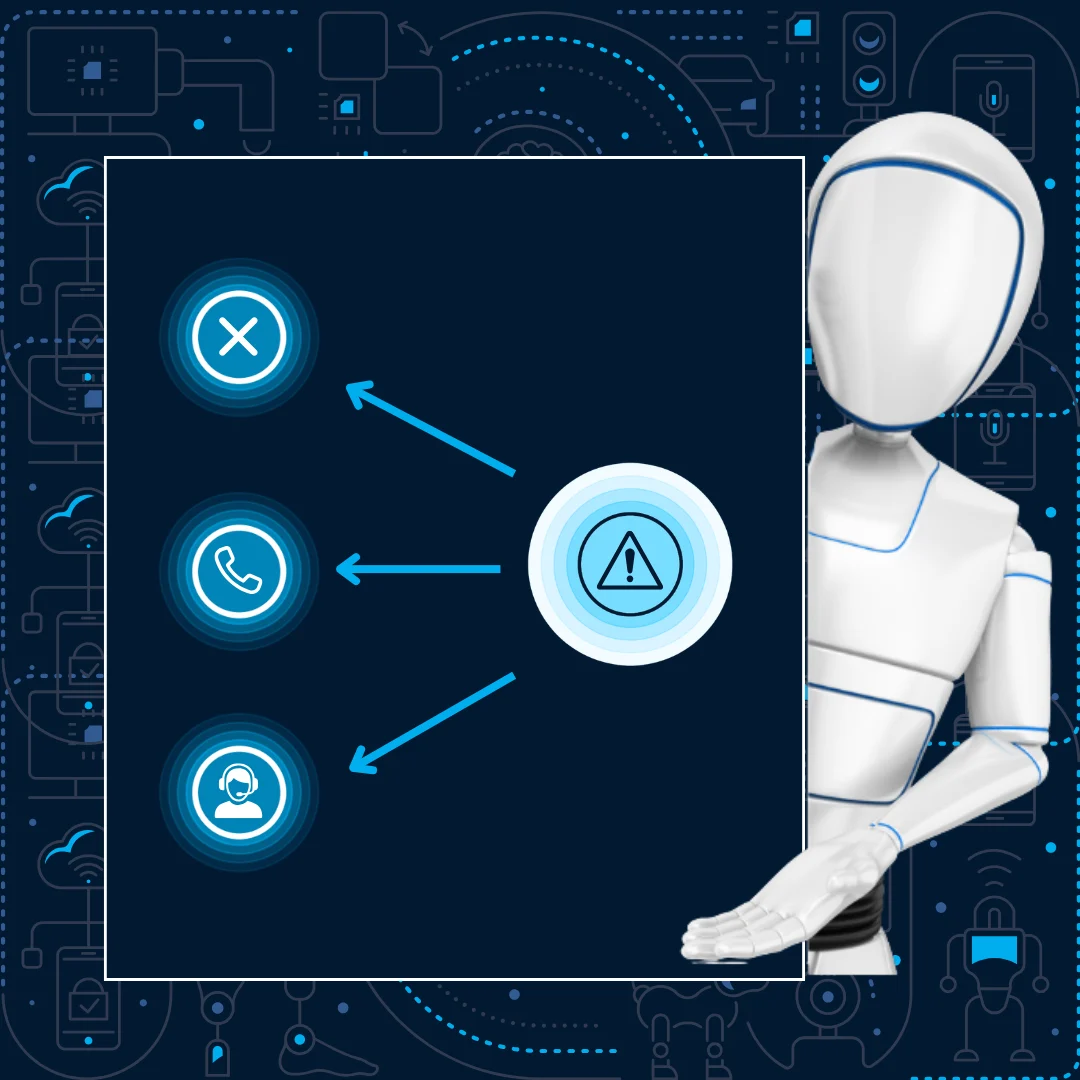
Some customers prefer to speak to a human. The chatbot has an explicit 'I want to talk to a person' fallback that routes the conversation to email or callback request. We don't push customers through an AI gauntlet against their wishes.
The chatbot is only as good as the underlying knowledge base. If your products, pricing or processes aren't documented well, the chatbot will struggle. The first week of any chatbot project is usually structuring the knowledge base properly — that work pays back over years of better answers.
And: a chatbot is not a replacement for a sales team. It is a force multiplier for one. The Block Moulds deployment works because there's a sales team behind it that actually responds to the leads it generates.
The chatbot will sometimes misread the intent of an unusual question. We tune the prompts based on conversation logs each month, and the system gets noticeably better — but in the early weeks of any deployment, some conversations are awkward. Sales team review of edge cases is part of the launch process.
Some customers prefer to speak to a human. The chatbot has an explicit 'I want to talk to a person' fallback that routes the conversation to email or callback request. We don't push customers through an AI gauntlet against their wishes.
The chatbot is only as good as the underlying knowledge base. If your products, pricing or processes aren't documented well, the chatbot will struggle. The first week of any chatbot project is usually structuring the knowledge base properly — that work pays back over years of better answers.
And: a chatbot is not a replacement for a sales team. It is a force multiplier for one. The Block Moulds deployment works because there's a sales team behind it that actually responds to the leads it generates.
What this proves
AI chatbots work well for B2B with structured catalogues
The Block Moulds chatbot is a demonstration that AI chatbots are well-suited to B2B businesses with structured product catalogues and qualified-lead workflows.
The pattern works particularly well when: the product or service has a finite catalogue that can be documented; there are standard questions customers ask that don't require human judgement; the qualifying questions for a quote can be specified in advance; the sales team prefers warm leads over cold cold-call follow-up; and the cost of a missed out-of-hours enquiry is high relative to the cost of an AI chatbot deployment.
That description fits a lot of UK businesses. Specialist manufacturing, building supplies, technical services, professional B2B services, equipment hire, plant and machinery suppliers, civils contractors, electrical wholesale — wherever there's a catalogue of products or services and qualifying questions to ask before quoting.
If that describes your business, an AI chatbot like the one Block Moulds runs is worth a conversation. The architecture transfers; the specifics adapt to your context.
The pattern works particularly well when: the product or service has a finite catalogue that can be documented; there are standard questions customers ask that don't require human judgement; the qualifying questions for a quote can be specified in advance; the sales team prefers warm leads over cold cold-call follow-up; and the cost of a missed out-of-hours enquiry is high relative to the cost of an AI chatbot deployment.
That description fits a lot of UK businesses. Specialist manufacturing, building supplies, technical services, professional B2B services, equipment hire, plant and machinery suppliers, civils contractors, electrical wholesale — wherever there's a catalogue of products or services and qualifying questions to ask before quoting.
If that describes your business, an AI chatbot like the one Block Moulds runs is worth a conversation. The architecture transfers; the specifics adapt to your context.
24/7
Coverage with no human staffing
<1 min
Typical SMS delivery to sales team
100%
Conversations logged for review
0
Made-up prices or lead times
Who else this approach works for
B2B industries with structured catalogues and qualified-lead workflows
Real chatbot, real enquiries
Live deployment handling 24/7 enquiry triage
How we'd build yours
The same three-step process used for Block Moulds
Discover
Discovery workshop covering your products, FAQs, qualifying questions, sales team routing rules and brand safety guardrails. Written scope and fixed-price quote after.
Discovery workshop covering your products, FAQs, qualifying questions, sales team routing rules and brand safety guardrails. Written scope and fixed-price quote after.
Build
Most chatbot deployments take 2-3 weeks from agreement to live. Knowledge base structuring, LLM and retrieval setup, widget UI, SMS or CRM integration. Staging deployment first, then live.
Most chatbot deployments take 2-3 weeks from agreement to live. Knowledge base structuring, LLM and retrieval setup, widget UI, SMS or CRM integration. Staging deployment first, then live.
Launch & Tune
Monthly tuning sessions where we review conversation logs and improve the knowledge base. The chatbot gets noticeably better month on month. You own the data.
Monthly tuning sessions where we review conversation logs and improve the knowledge base. The chatbot gets noticeably better month on month. You own the data.
Common questions about chatbot builds
Things prospects ask before signing a build agreement
Does the chatbot make things up?
No. We use retrieval-augmented generation — the chatbot only answers from your vetted knowledge base. When asked something outside the knowledge base, it captures the question and routes to a human. Brand safety guardrails are explicit, not implied.
Yes. The chatbot keeps reading the latest version of your knowledge base — typically a Google Doc plus your live WooCommerce or product catalogue. When you update the source, the chatbot picks up the change at the next conversation.
Yes. Qualified leads can flow to SMS (via Twilio), to your CRM (HubSpot, Pipedrive, Salesforce, Zoho), to email, or to Slack — whatever fits your workflow. The Block Moulds deployment uses SMS for speed.
Conversation data is stored in your WordPress database, on your hosting. No third-party chatbot SaaS dashboard. Full transcript logs, captured contact details, actions taken — all under your control. UK data routing wherever possible.
Yes. The chatbot widget can be styled to match your site — colours, fonts, branding, tone of voice. Looks like a natural part of your site, not a generic third-party widget.
Setup fee plus monthly platform cost. Setup typically £1,500-£3,500 depending on knowledge base structuring and integrations. Platform cost £100-£250 a month for LLM usage, monitoring and monthly tuning. We quote actual prices after a discovery call.
Capturing every after-hours enquiry doesn't need a 24/7 receptionist.
Let's talk about what an AI chatbot would look like for your business.
Let's talk about what an AI chatbot would look like for your business.